
-
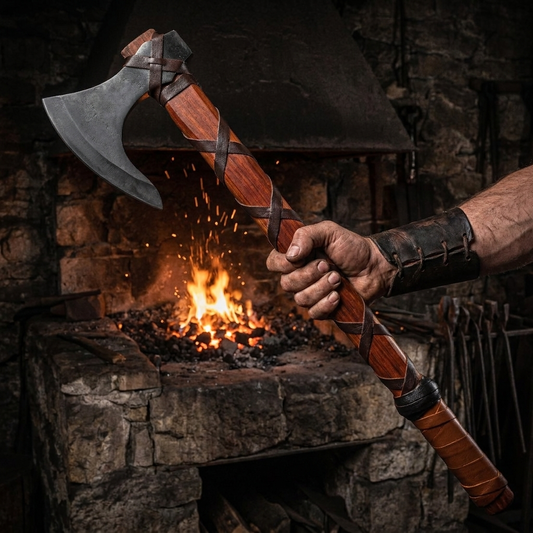
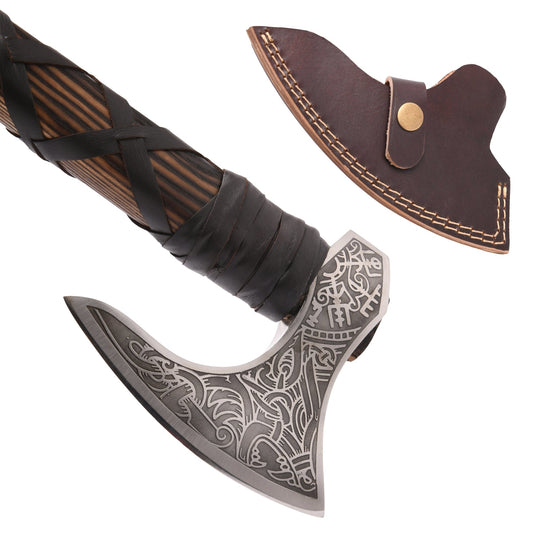
The Skeggøx – Hand-Forged Viking Bearded Axe of Ragnar Lothbrok
Regular price $139.99 USDRegular price -
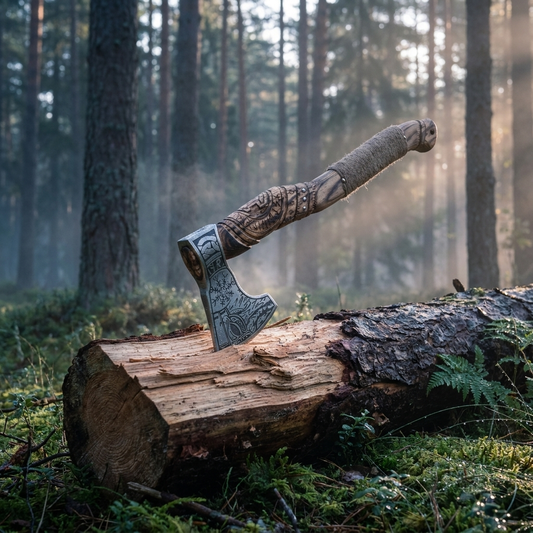
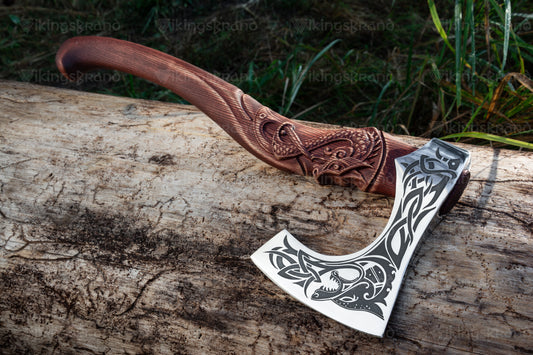
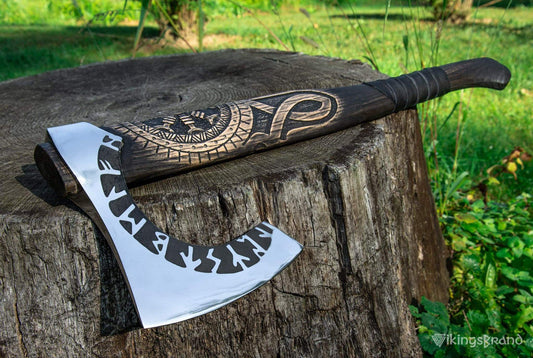
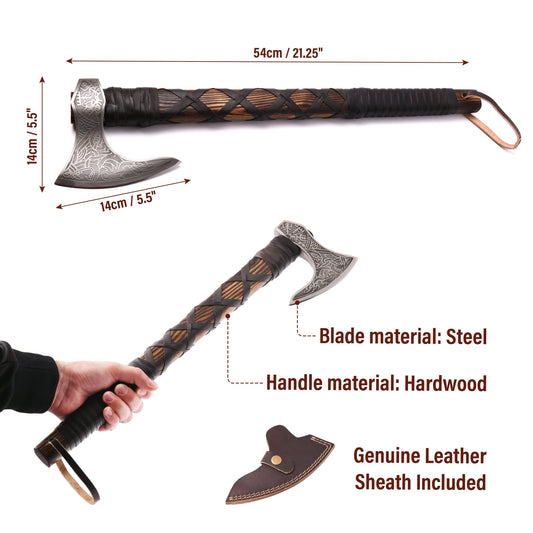
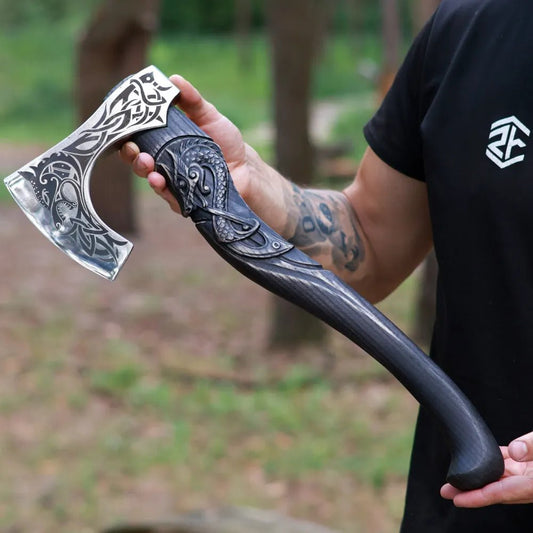
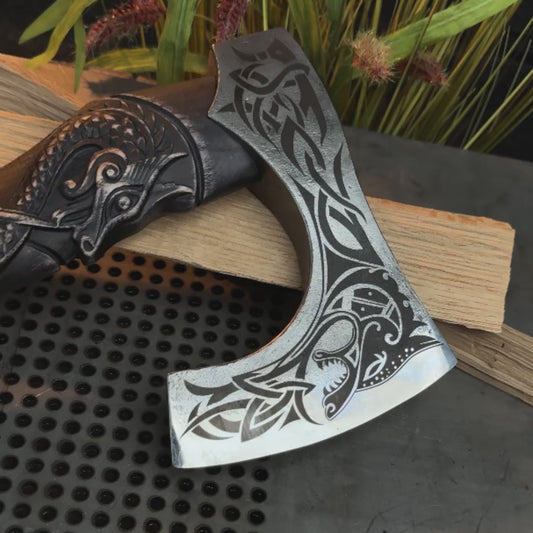
Hand-Forged Viking Axe – Decorated Head & Carved Handle
Regular price $179.99 USDRegular price -
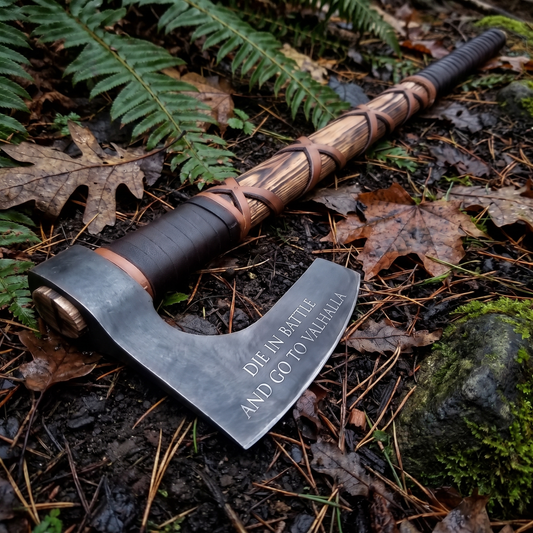
Fenrir Viking Axe – Hand-Forged Wolf Axe with Leather Cover
Regular price From $358.99 USDRegular price -
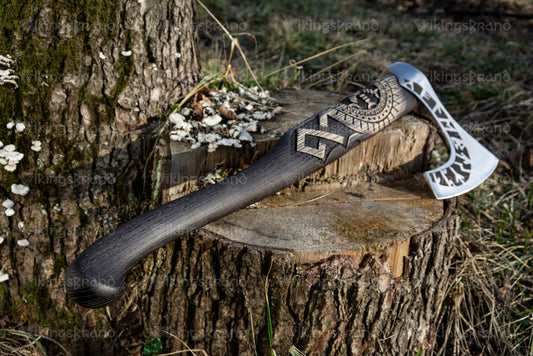
Hand-Forged & Carved Viking Axe "Othala" with Runic Head & Wrapped Handle
Regular price From $389.99 USDRegular price -
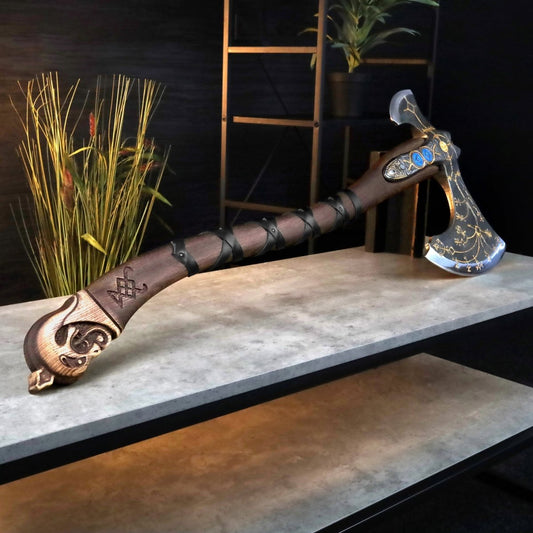
Leviathan Axe – 2-Handed Hand-Forged Kratos Axe (God of War)
Regular price From $499.00 USDRegular price -
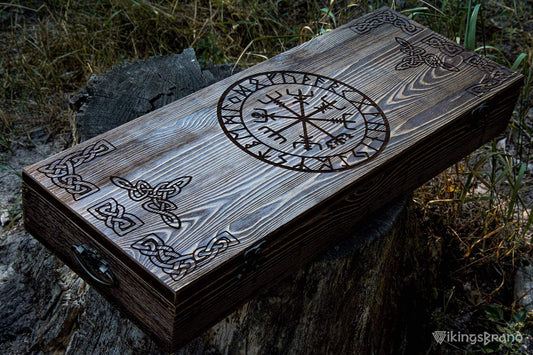
Hand-Crafted Viking Battle Axe – Wolf Head & Vegvísir Engraved
Regular price $149.99 USDRegular price -
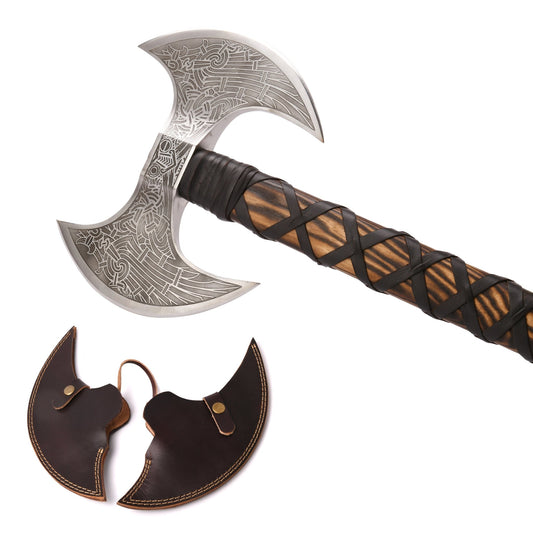
Odin Twin-Blade Viking Axe – Hand-Crafted Display Axe (Huginn & Muninn)
Regular price $169.99 USDRegular price -
Bjørn Viking Axe – Hand-Forged Runic Axe with Leather Cover
Regular price From $276.00 USDRegular price -
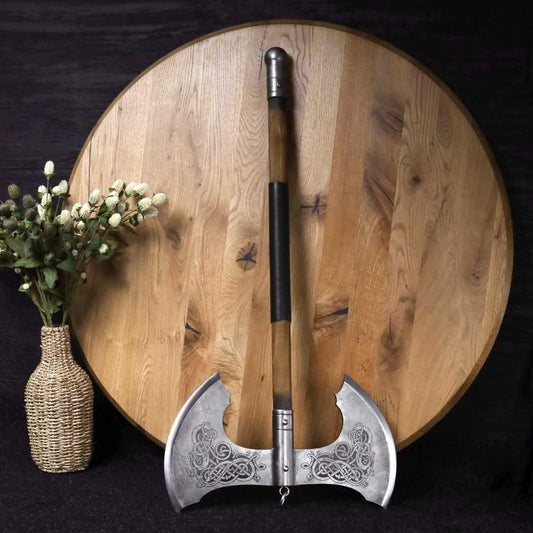
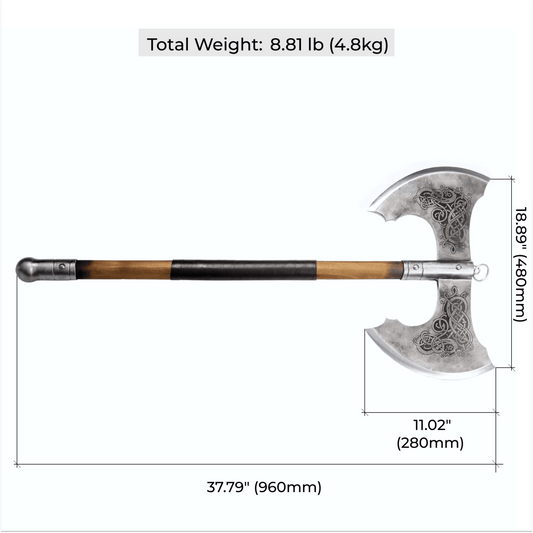
Jotungard Double-Edged Viking Axe – Giant Norse Display Axe
Regular price $295.00 USDRegular price -
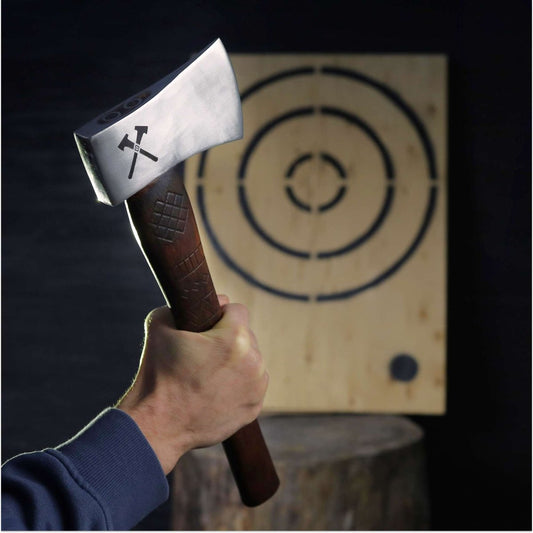
Vargr Viking Throwing Axe – Hand-Forged & Functional
Regular price $89.00 USDRegular price -
Valhalla Bearded Axe – 18 in Etched Carbon Steel Axe with Sheath
Regular price $139.99 USDRegular price -
Kratos Leviathan Axe – 40 in Carbon Steel, Gold-Tone Rune Etching
Regular price $280.00 USDRegular price -
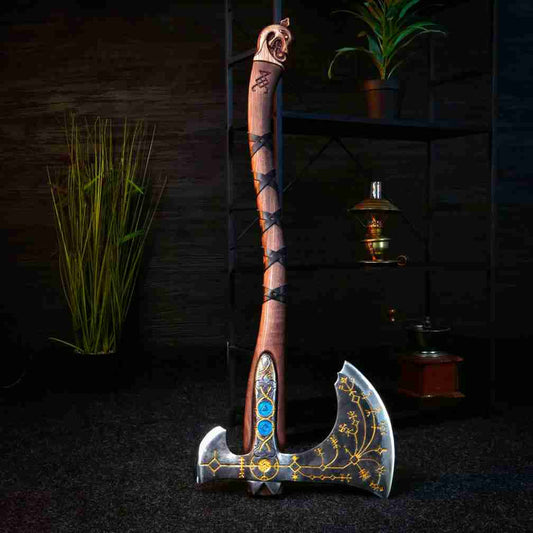
Kratos Axe – Hand-Forged Carbon Steel, Blue Rune Engraving, 40 in
Regular price $249.00 USDRegular price -
Leviathan Axe – 40 in Engraved High-Carbon Steel Axe with Sheath
Regular price $280.00 USDRegular price -
Forged Viking Bearded Axe with Rune Engraving, 28 in
Regular price $199.99 USDRegular price -
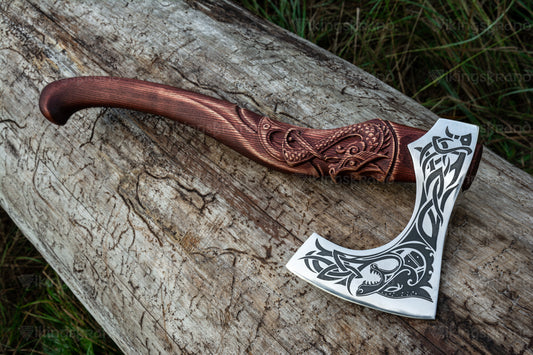
Hand-Forged Hardened Bearded Viking Axe “Fenrisulfr” with Carved Handle
Regular price $269.00 USDRegular price





A Buyer's Guide to Viking Axes
The axe was the defining weapon and everyday tool of the Viking Age. Cheaper and faster to forge than a sword, it was carried by nearly every free Norseman, used to fell trees and build longships as readily as to fight. That is exactly why a Viking axe still feels so authentic today: it is the tool that built and defended the Norse world. Below is everything you need to choose the right one.
Which shape should you buy?
Four shapes cover almost everything on this page. The bearded axe (Skeggøx) is the iconic one-handed Viking profile and the safest first pick. The Dane axe (breiðøx) is the long two-handed weapon built for reach, like our hand-forged double-edged "Havamal" battle axe. A hand axe or hatchet suits camp and bushcraft use, and a purpose-built throwing axe is tempered and balanced for the target. For the full historical breakdown, including the Petersen typology and the francisca, see our illustrated guide to the types of Viking axes.
Functional or display?
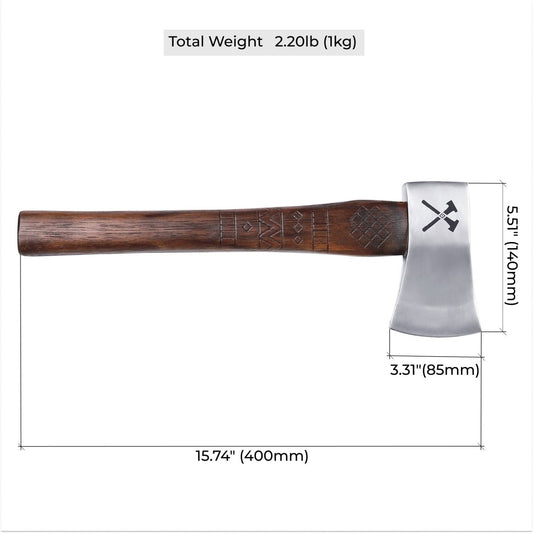
Some of our axes are battle-ready and fully functional, forged and heat-treated to hold an edge for cutting, splitting and throwing, like our hand-forged axe with a decorated head and carved handle. Others are detailed display and collector's pieces for the wall or the mantel. Each product page states which it is, so you always know what you're getting.
Steel, handles & care
High-carbon steel (such as 1045/1095) takes and holds a keener edge and is the choice for functional axes, but it will rust if neglected, keep it lightly oiled. Stainless steel resists corrosion and is ideal for display and everyday wear. Handles are turned from hardwoods like ash, oak or hickory for shock resistance. For the full routine, see our Viking axe care guide.
How to choose your Viking axe
Want a first Viking axe or a gift? A bearded Skeggøx is the iconic, versatile pick. After reach and presence? Go for a Dane or battle axe. Buying for the trail or the throwing target? Choose a hand axe or a purpose-built throwing axe. For deeper background, read our guides on what a bearded axe is and the meaning of the axe in Norse symbolism.
Viking Axes, FAQ
What is a Viking axe called?
The classic Viking axe is the Skeggøx or "bearded axe," named for the beard-like extension of its lower edge. The large two-handed version is the Dane axe (breiðøx).
What is a bearded axe?
A bearded axe has the lower part of its blade extended downward into a "beard." This gives a longer cutting edge on a light head, and lets the user hook an opponent's shield or weapon, the signature Viking design.
Did Vikings use axes or swords?
Both, but axes were far more common. A sword took much more iron and skill to make and was a mark of wealth, while a good axe was affordable, doubled as a tool, and was deadly in battle, so most Norsemen fought with an axe.
Are your Viking axes functional / battle-ready?
Some are. Many of our axes are hand-forged, heat-treated and fully functional for cutting, splitting and throwing; others are display and collector's pieces. Each product page says which, so you can buy with confidence.
What steel are Viking axes made from?
Functional axes are usually high-carbon steel (e.g. 1045/1095) for edge retention, while display pieces are often stainless steel for rust resistance. Handles are hardwood such as ash, oak or hickory.
How do I care for a Viking axe?
Keep the head dry and lightly oiled to prevent rust (especially high-carbon steel), store it away from damp, and occasionally re-oil the wooden handle to stop it drying out. Full routine in our Viking axe care guide.
How can you tell if a Viking axe replica is historically accurate?
A plausible replica is single-bladed, has a light, thin head (roughly 0.5–1 kg for a one-hander), matches one of the Petersen type shapes A–M, and hangs on a plain hardwood haft. Red flags: double bits, spikes, heavy "chopper" heads on short hafts, and fantasy engravings sold as historical. Our illustrated guide to Viking axe types shows the real shapes.
What is the difference between a sharpened and a blunt reenactment axe?
A sharpened (functional) axe has a real cutting edge for cutting, camp work or throwing. A blunt reenactment axe has the edge deliberately rounded to a few millimetres for choreographed combat: most reenactment societies require it. The head shape can be identical; only the edge differs.
Are there legal restrictions on owning a Viking axe replica?
In most countries a replica axe is legal to own as a tool or collectible, but rules on carrying a blade in public, transport and buyer age differ by country, state and city. Keep it packed away in transit and check your local rules, this is general information, not legal advice.
QUESTIONS